Book Categories:
One more story for the road?
Not sure where to begin? Compare xianxia, xuanhuan, and wuxia in our short reader’s guide. WholeSaga is preparing carefully edited, complete Chinese fantasy stories in English.
Book Categories:


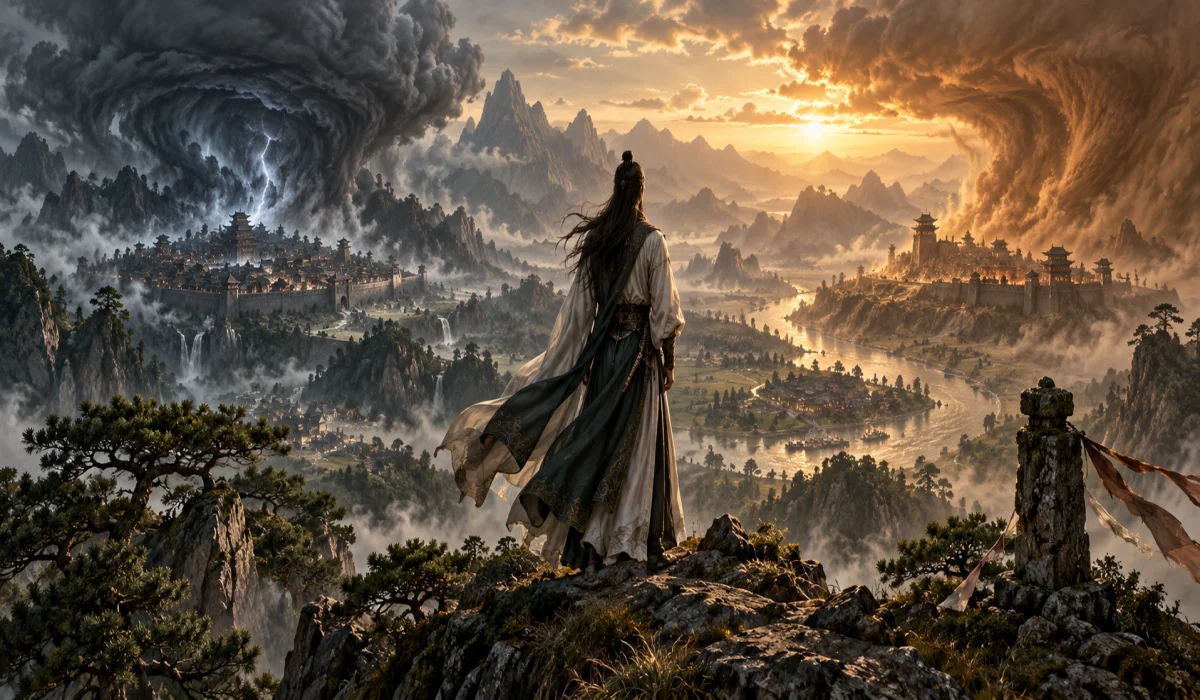
Tension with an overpowered protagonist does not disappear unless winning a fight is the story’s only meaningful question. Strong stories shift uncertainty toward what the hero wants, what victory will cost, whom they can protect, what they do not know, and how their choices change the world. The reader may expect the protagonist to win and still worry about the result.
Power answers a narrow question: can this character overcome a particular obstacle by force? A story can ask much more. Can the hero arrive before a treaty collapses? Can they identify the real traitor? Can they save two cities when each needs them at the same hour? Will they keep a promise when breaking it would produce the easiest victory?
This distinction is useful because a protagonist’s goal, not their strength score, connects them to the plot. Purdue OWL’s fiction guidance recommends giving characters clear goals and linking the main obstacle to those goals. An overwhelming fighter can therefore remain dramatically vulnerable when the obstacle attacks a goal that fighting cannot secure.
Original fictional example: Mara can end any duel with one gesture. During a hostage exchange, however, both delegations wear identical masks, and striking the wrong person will restart a twenty-year war. Her power is certain; her judgment is not.
The scene does not pretend Mara might lose a fair duel. It gives her a problem that strength cannot solve on its own.
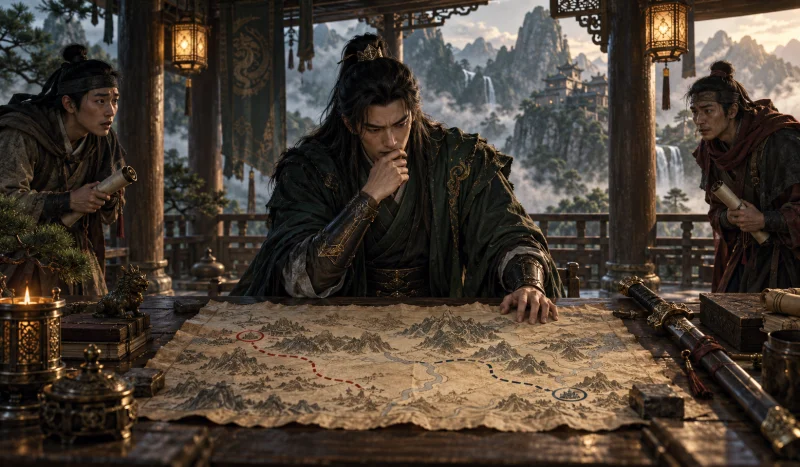
Three forms of pressure build noncombat stakes for an overpowered hero:
These pressures preserve the pleasure of competence. The hero is still formidable, yet the reader has a real reason to keep reading. A ticking clock is not a disguised stronger enemy; it changes the shape of the problem.
Information gaps also make delayed intervention useful. An ally may ask the hero to wait until the real source of danger is known. The suspense is not whether the hero can win a duel, but whether acting early helps the wrong side or closes a chance to save others.
The consequences of overwhelming power in fiction can begin after an easy battle. Publicly defeating a governor may free a town while creating a succession crisis. Destroying an ancient gate may stop an invasion while cutting off the only route home. Saving a rival may preserve the hero’s principles while strengthening a future opponent.
Consequences should grow from established relationships and rules, not arrive as arbitrary punishment. If every effortless win summons a previously unmentioned stronger villain, escalation can feel mechanical. If victory changes alliances, obligations, reputations, or access to resources, the world feels responsive.
Original fictional example: Iven breaks the siege wall in seconds, exactly as everyone expected. The displaced river then floods the farms of the people he came to rescue. The next arc is not about finding a wall he cannot break; it is about whether those people will accept his help again.
The protagonist remains overpowered. The story simply treats power as an action with a footprint.
A limit does not have to be a secret weakness or a temporary loss of power. It can be a value, duty, blind spot, or relationship. A ruler who refuses mind control, a healer who will not choose which patient deserves life, or an immortal who cannot understand a child’s fear all face meaningful constraints.
Purdue OWL also advises that shortcomings should arise from a character’s background and beliefs rather than being assigned at random. That principle matters here. A convenient weakness switched on for one scene makes the author visible. A stable conviction that repeatedly complicates easy solutions reveals character.
If only the protagonist can make meaningful decisions, every other character becomes an audience. Give allies expertise, authority, trust, or local knowledge the hero lacks. The strongest person in the room may still need a diplomat to secure consent, an archivist to interpret a warning, or a former enemy to tell the truth.
This also creates tension without diminishing the lead. The question becomes whether a team can coordinate around exceptional power, not whether the story will suddenly make that power irrelevant.
Before a confrontation, ask four questions:
If the text supplies persuasive answers, the outcome of the fight can be obvious while the outcome of the scene remains open.
Readers looking for this protagonist type in Chinese fantasy can compare the different cultivation novel genres and then review what xianxia is. Those distinctions help set expectations for the kinds of stakes a powerful hero may face.
No. Boredom is more likely when challenges repeat without changing goals, costs, relationships, or consequences. Extreme competence can support comedy, awe, strategy, or moral drama.
No. A stronger opponent is one option, not a requirement. Deadlines, conflicting duties, mysteries, politics, and irreversible choices can create tension without changing the power scale.
No. Limits grounded in knowledge, values, authority, attention, or relationships can be more durable than a single combat vulnerability.
Yes. Moral choices for an overpowered character can sustain suspense because public strength cannot remove conflicting responsibilities, incomplete information, deadlines, or the consequences of using power. The reader can know the hero will win a fight while remaining uncertain about the decision that follows.
For a closer look at victories that change what witnesses believe, see how public reversal scenes reshape a character’s reputation.