Book Categories:
One more story for the road?
Not sure where to begin? Compare xianxia, xuanhuan, and wuxia in our short reader’s guide. WholeSaga is preparing carefully edited, complete Chinese fantasy stories in English.
Book Categories:


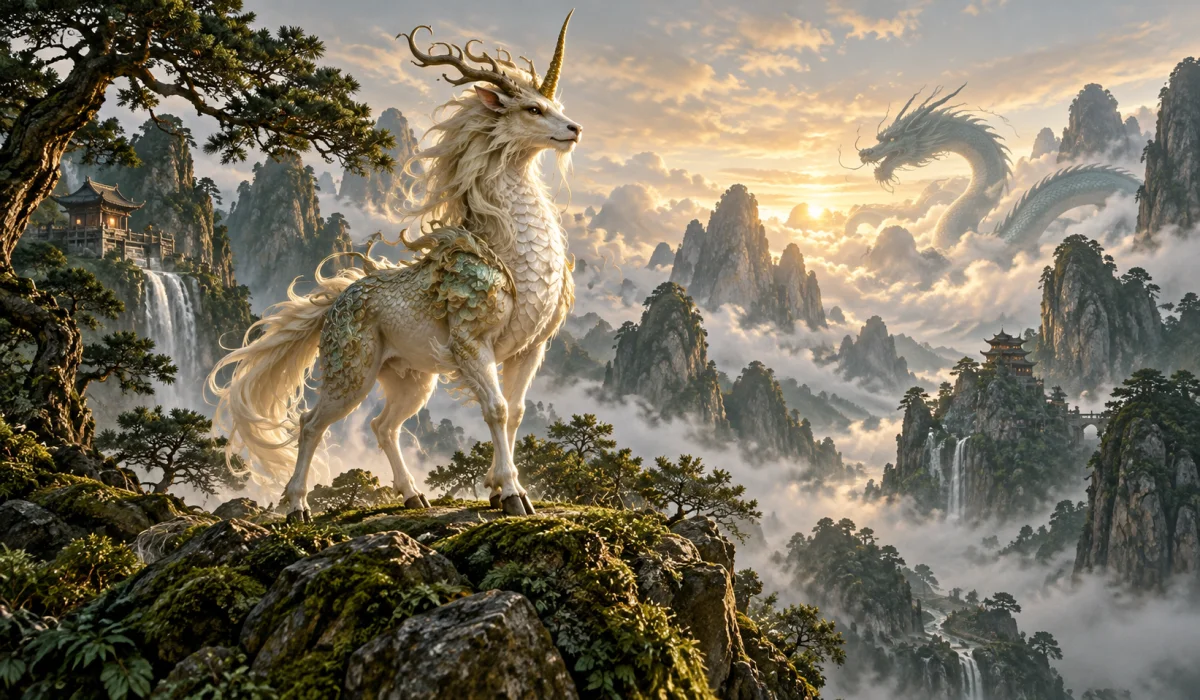
The clearest answer to how mythical creatures work in xianxia is that they often draw names and imagery from older literature, religion, folklore, and art, but a novel can redesign their bodies, powers, personalities, and relationships. The safest reading rule is: tradition supplies a repertoire; the story supplies the rules.
China’s creature traditions developed across many centuries, regions, genres, and media. An early text, a tomb image, an imperial robe, and a modern web novel may use the same creature for different purposes. Even old sources can disagree or emphasize different features.
Museum collections make that variation visible. Dragons, fenghuang, Vermilion Birds, and qilin appear in paintings, talismans, textiles, and court imagery from different periods. The same name can carry several associations before a novelist gives the creature a new role.
Xianxia authors inherit that freedom. A creature may become a clan ancestor, contract beast, bloodline, mount, ingredient, constellation, divine office, or ordinary species within one setting. None of those roles should be projected onto every novel.
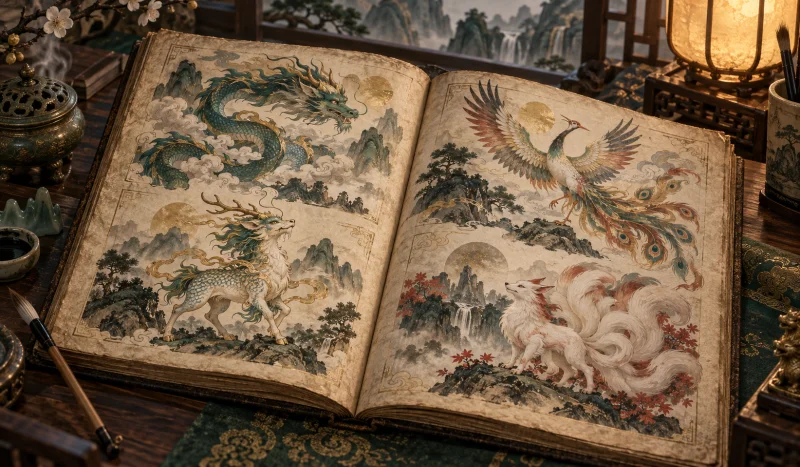
The Chinese long (龙/龍) is not simply a Western dragon with a different costume. Its associations vary. A late-Ming dragon panel at the Metropolitan Museum of Art places two dragons among clouds and describes the creatures as symbols of imperial power and benevolence.
A xianxia dragon, however, may breathe fire, control time, cultivate in human form, or rule a species hierarchy. Those are story decisions. Even labels such as jiaolong, yinglong, or “true dragon” may be defined differently by different authors. When a novel introduces dragon blood or a dragon clan, read its local exposition before assuming temperament, element, or rank.
English translations often call both creatures a “phoenix,” which can conceal an important distinction.
The fenghuang is a named Chinese bird motif with a long history in art. The Metropolitan Museum preserves a Chinese painting explicitly catalogued as a Fenghuang, rather than identifying it as the Vermilion Bird.
The Zhuque, or Vermilion Bird, belongs to a directional cosmological framework. The Metropolitan Museum catalogs a Chinese talisman as the Vermilion-bird God of the South, preserving both the creature’s name and its southern association.
They can be blended by a modern story, but they do not begin as two spellings for one universal fire bird. Nor must either resurrect from ashes. If a translation says “phoenix,” watch for the Chinese term, directional symbolism, or the novel’s own explanation.
The qilin is sometimes translated as “Chinese unicorn,” but that label can import expectations from another tradition. A Metropolitan Museum study of the qilin in Chinese art calls it an especially auspicious animal and explains why its appearance could be interpreted as proof of virtuous rule. The same study notes that historical descriptions did not establish one precise appearance.
Fiction may retain that moral aura, reverse it, or use only the visual silhouette. A xianxia qilin might command an element, guard a trial, or supply a bloodline. There is no cross-novel list of obligatory powers. “Qilin” tells you which cultural archive the author is invoking; the chapter tells you what the being can do.
Separate three layers:
This method prevents two opposite errors: treating fiction as historical documentation, or treating cultural references as empty decoration. The question “are xianxia beast rankings universal?” belongs to the local-mechanics layer, because authors can create freely while still depending on readers’ recognition of a name, shape, color, or symbolic association.
For genre boundaries, see Cultivation Novel Genres. For a general introduction rather than a creature index, see What Is Xianxia?.
No. If you ask “do all Chinese dragons control water,” remember that water and rain are important traditional associations, but individual stories assign their own elements and abilities.
No. The question “are fenghuang and Zhuque the same creature” collapses different traditional frameworks, although translations and modern fiction sometimes merge them.
No. Readers asking “are xianxia beast rankings universal” should follow the current novel: bloodline grades, transformations, and species hierarchies are worldbuilding choices, not a shared mythology system.