Book Categories:
One more story for the road?
Not sure where to begin? Compare xianxia, xuanhuan, and wuxia in our short reader’s guide. WholeSaga is preparing carefully edited, complete Chinese fantasy stories in English.
Book Categories:


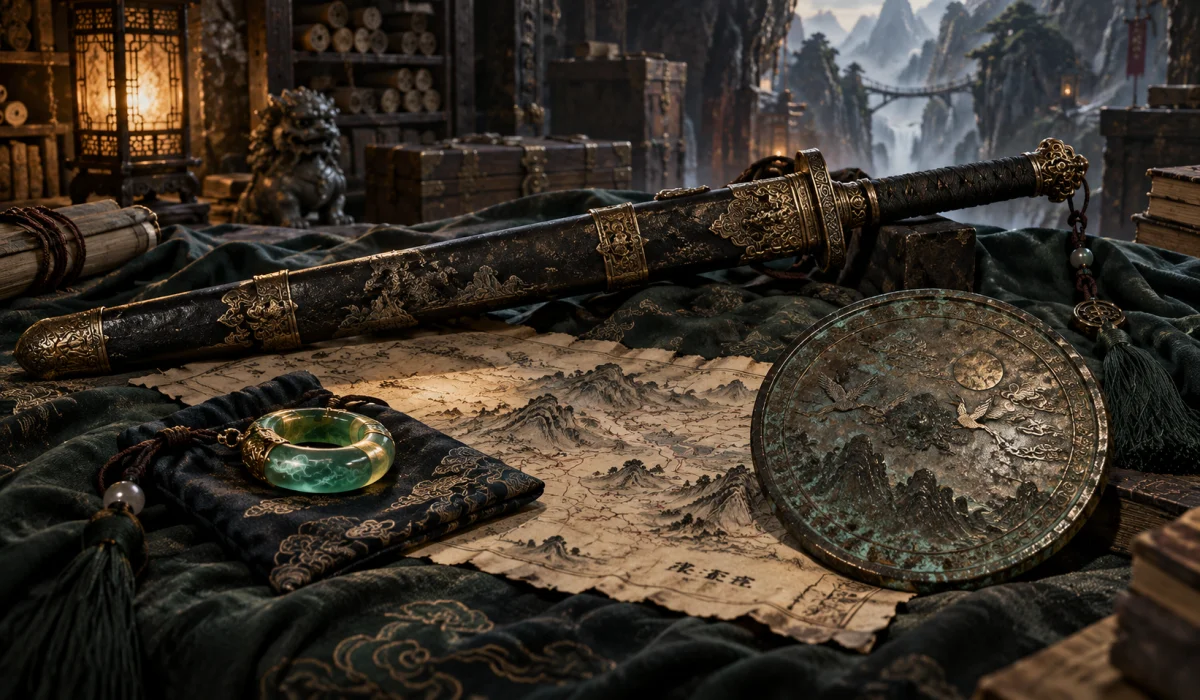
Cultivation artifacts are fictional weapons, tools, containers, talismans, or other treasures that interact with a story’s supernatural rules. To see how cultivation artifacts shape story conflict, ask who can use one, what it costs, and who else has a claim to it. Imagine a sword that can win a duel and expose its bearer as the heir to a disgraced sect. Names and rank ladders vary by novel.
English editions may use magic treasure, magical item, spirit tool, artifact, or a work-specific term for overlapping ideas. WuxiaWorld’s general glossary, for example, treats “magic treasures” as a broad category that can include weapons, clothing, trinkets, and talismans. That glossary helps with recurring translation vocabulary, but it does not establish one rulebook for every cultivation story.
The safest reading habit is therefore local: note what the current novel says the object can do, who can activate it, and what restrictions apply. A “heaven-rank sword” in one series does not automatically equal an item with the same label elsewhere.
An ability that belongs entirely to the protagonist is always available unless the story disables it. An artifact can be lent, stolen, sealed, auctioned, inherited, or refused. That makes power negotiable.
Original fictional example: A bell can stop any duel, but each use publicly records the user’s true name. The fugitive carrying it must choose between saving a stranger and revealing her location.
The bell’s strength matters, but its disclosure cost creates the scene.
An old weapon can connect a current conflict to a vanished sect, broken treaty, or disgraced owner. Scratches, repairs, missing pieces, and contradictory records let the object function as evidence. The artifact does not need to speak; different people can tell competing stories about it.
This is more productive than treating “ancient” as a synonym for “strongest.” Age may make an item prestigious, obsolete, damaged, politically sensitive, or misunderstood.
Ownership can create duties, and artifact spirits in cultivation fiction can turn those duties into questions of loyalty, consent, or care. A clan may recognize a seal, a craftsperson may retain repair rights, or a spirit may reject the person who won an artifact fairly. When several characters have legitimate claims, the treasure becomes a relationship problem rather than loot.
Sentient artifacts make that function explicit. A speaking sword or awakened mirror can be mentor, witness, dependent, rival, or unreliable partner. Its personality should affect decisions, not merely provide explanations on demand.
Who can obtain, identify, and maintain valuable objects tells the reader how institutions work. A sect vault suggests controlled access. A public auction converts reputation and wealth into leverage. A ruin rewards exploration but also raises questions about ownership. A refining workshop makes craft knowledge and supply chains visible.
Artifacts can therefore expose inequality without a lecture. Two fighters may have equal skill while only one can replace a cracked blade.
A sealed or incomplete object promises future discovery. The satisfying question is not only “when will it become stronger?” A revelation might change its purpose: a defensive shield is actually a prison door, or a ceremonial spear is proof that the official history is false.
The new information should reinterpret earlier details. Otherwise, repeated seals can feel like an endless sequence of upgrades with different labels.
Magic treasure ranks in cultivation novels are story-specific: individual works may define precise hierarchies, but those systems belong to those novels. The Talisman Emperor glossary lists a work-specific set of magic-treasure ranks. Another WuxiaWorld title, Lord of All Realms, publishes a different sequence for spiritual tools. Comparing the two is enough to show why readers should not combine separate glossaries into a universal ladder.
Instead, track three practical questions:
These questions survive translation differences and remain useful even when the story introduces a higher realm.
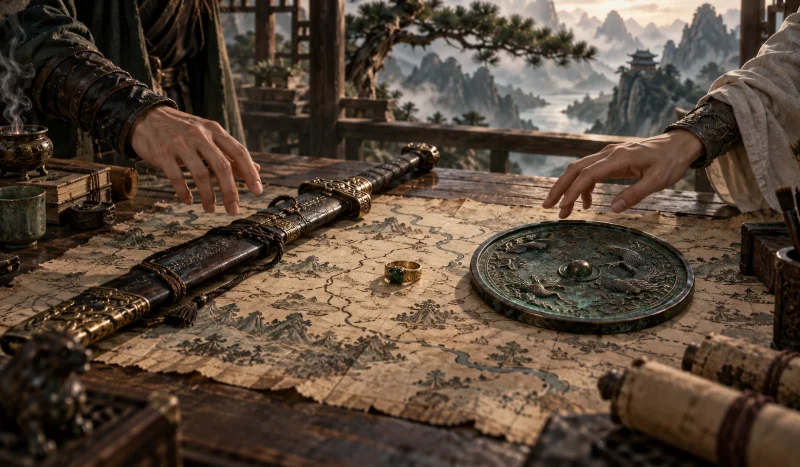
Treasure hunting arcs in cultivation stories work best when characters want different outcomes from the same object. One seeker may need the medicine stored inside a cauldron; another needs the inscription on its base; a third wants to destroy proof that it ever existed. Competition then continues even after someone reaches the treasure first.
Watch for setup before the discovery: old maps, material shortages, ownership claims, repair skills, or warnings about activation. These details reveal whether the find will solve a problem, create a debt, or shift the balance between groups.
When a new object appears, ask:
If the answers affect the plot, the artifact is doing narrative work rather than decorating a power list.
A single object can also be part of a larger spell. If a flag or stone only works when set at a particular point, our guide to formation arrays in xianxia explains how its placement can affect the whole scene. For a quick refresher on spiritual energy or sect ranks, see the cultivation glossary.
No. Depending on the novel, the category may include armor, storage objects, transport, talismans, furnaces, seals, buildings, or information-bearing items.
No. Translations and fictional systems vary. Use the current edition’s explanations and glossary where available.
No. Loyalty, contracts, independence, and even sentience itself are story-specific rules.
No. An object can be repaired, reinterpreted, passed to another character, retired, or remain useful for a noncombat function.